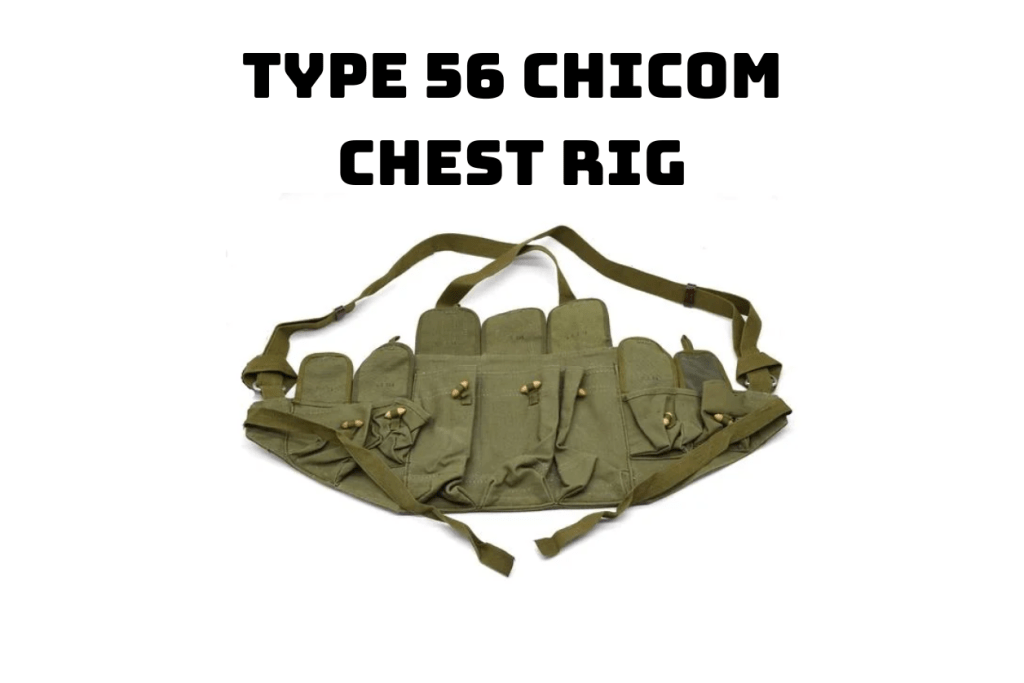
The Chicom Type 56 chest rig is a legendary piece of gear with roots in Cold War-era China that has become a favorite in the airsoft community today. This simple canvas chest rig, originally designed to carry ammunition for the Chinese Type 56 assault rifle (a variant of the AK-47), offers a unique blend of historical authenticity, rugged practicality, and budget-friendly performance. In this post, we’ll dive deep into the origins of the Chicom Type 56 rig, its widespread use by communist militaries and insurgents around the world, and its enduring place in military surplus culture. Then, we’ll explore why this iconic chest rig is so popular in airsoft – especially among budget-conscious players, beginners, and military gear enthusiasts – and how it serves as an excellent lightweight load-bearing option. We’ll also cover the rig’s key features (it holds 3 magazines and 4 grenades, perfect for AK platforms and airsoft grenades like the EG67), along with the pros and cons of using one in play. By the end, you’ll see why the Chicom Type 56 rig is a versatile, durable, and mod-friendly choice for airsofters seeking an affordable tactical edge with a touch of history.
Origins in Cold War China
The story of the Chicom Type 56 chest rig begins in the 1950s in Communist China, during the early days of the Cold War. The People’s Liberation Army (PLA) had adopted a new rifle – the Type 56 (a Chinese-produced AK-47) – and needed a way for soldiers to carry ammunition comfortably and reload quickly in the field. Traditional belt pouches were cumbersome, so Chinese designers developed a simple canvas chest rig that distributed weight across the chest. Nicknamed “Chicom” (short for “Chinese Communist”), this rig featured a row of pouches on the front, allowing riflemen to carry magazines and grenades on their chest for easy access. The Type 56 chest rig was one of the earliest examples of moving ammo storage from the belt to the chest, a concept that would later influence tactical gear designs worldwide.
Made from heavy-duty cotton canvas in a dull olive drab or khaki green, the original Chicom rigs were built to be tough, lightweight, and dirt simple. They had three large magazine pouches across the front (each designed to hold a 30-round AK magazine) and a series of smaller pouches on the sides for grenades and accessories (often a total of four smaller pockets, two on each end). Instead of noisy snaps or Velcro (which didn’t exist yet), the flaps were secured with wooden toggle buttons and loops, which are quiet and reliable. The shoulder straps were just simple canvas strips that cross in the back and tie to a waist strap, making the rig adjustable to different body sizes. This no-frills design was inexpensive to mass-produce and easy to use, which was perfect for the massive conscript army of China at the time.
Widespread Use by Insurgents and Communist Militaries
The Chicom Type 56 chest rig quickly proved its worth and didn’t stay within China’s borders for long. During the Cold War, China supplied weapons and equipment to allied communist movements and insurgencies around the globe, and the Type 56 chest rig was high on the list of exported gear. It first saw major combat use in the Vietnam War – the rig became iconic as part of the equipment of the Viet Cong guerrillas and North Vietnamese Army (NVA) soldiers. Photos and footage from the Vietnam War often show NVA troops wearing these chest rigs stuffed with AK magazines while fighting in the jungles. American troops even occasionally picked up and used Chicom rigs themselves for their practical benefits (and to blend in on special ops missions).
Beyond Vietnam, the Chicom rig spread to countless other conflict zones. “Where there is an AK, there is also a Chicom chest rig,” as the saying goes. Communist-aligned armies and rebel groups in Asia, Africa, and the Middle East all made use of this handy rig. For example, Soviet soldiers in the 1980s Afghan War sometimes used Chicom chest rigs (captured or supplied) to carry ammo, and the design inspired the Soviets to create their own similar rigs later. Fighters in places like Cambodia, Laos, Angola, Mozambique, and countless other hotspots received Chinese military aid, often including these chest rigs to accompany the ubiquitous AK rifles. Even non-communist guerrillas and militias found the Chicom rig useful – it was simple and effective gear that anyone could utilize regardless of ideology. Over decades of warfare, the Type 56 chest rig built a reputation as the guerrilla fighter’s gear of choice, a symbol of revolutionary armies and insurgents worldwide.
From Surplus Staple to Military Collectible
After the wars ebb, the surplus flows. With so many Chicom chest rigs produced and distributed from the 1960s onward, it’s no surprise that huge numbers eventually ended up on the military surplus market. By the late 20th century, military surplus stores and catalogs in the West were filled with these rigs, often sold for dirt cheap prices. Western shooters, survivalists, and gear enthusiasts eagerly bought them up as a practical way to carry magazines at the shooting range or in the field. The rigs were praised for being nearly indestructible, lightweight, and remarkably affordable. You could find them in piles at gun shows or surplus shops, usually still smelling of mothballs and history.
Over time, the humble Chicom rig also became a collector’s item and piece of militaria history. For Vietnam War reenactors or military history buffs, owning an original Type 56 chest rig is like having a tangible piece of Cold War history. The rigs have distinctive details – from the faded canvas to Chinese arsenal stamps or markings (some even ironically stamped with things like “Made in Russia” due to quirky Cold War distribution). Collectors appreciate these details and the rig’s connection to famous conflicts and military units. Yet even as it gains status as a collectible, the Chicom rig has never lost its practical appeal. Many owners will take a surplus Chicom off the display shelf and put it into real use, whether for shooting sports or, as we’ll discuss next, in airsoft skirmishes.
Design and Features of the Type 56 Chest Rig
Before we get into why airsofters love it, let’s break down the key features of the Chicom Type 56 chest rig. Understanding its design will show why it’s such a versatile piece of kit:
- Magazine Capacity: The rig has three primary pouches on the front, each originally meant to hold one 30-round AK magazine (7.62×39). This gives a total capacity of three AK mags readily accessible on your chest. In airsoft terms, that means you can carry three AK AEG magazines – plenty for a standard skirmish if you’re not a trigger-happy type. (Bonus: Each pouch is quite roomy, so some players find they can fit two thinner STANAG/M4 magazines in one pouch, or one mag plus a speedloader or pistol mag. It’s snug, but doable, especially if you adjust the closure or use mag pulls.)
- Grenade/Accessory Pouches: On the sides of the rig are four smaller pouches (two on the left end and two on the right end). These were originally intended for items like hand grenades (such as Chinese stick grenades or Soviet F1 grenades) and an oil bottle or cleaning kit for the rifle. In practice, each of these small pockets is perfect for airsoft grenades and other accessories. Notably, they are an ideal size for EG67 airsoft grenades (the popular pea grenades used in MilSim games) – you can securely fit one EG67 pyro grenade per pouch. If grenades aren’t your thing, these pouches can hold other handy items: dead rags, BB speedloaders, CO2 cartridges, a small first aid kit, snacks, or even a mobile phone or multi-tool.
- Material and Build: The Type 56 rig is made from thick cotton canvas fabric. This material is very durable (built to survive combat conditions), yet relatively lightweight. It can soak up water and get muddy, but it dries out and keeps going. The canvas can also be easily dyed or spray-painted if you want to change its color for camouflage. All the stitching is heavy-duty, and genuine surplus ones often have that telltale fraying and fading that adds character without compromising function. The overall weight of the empty rig is minimal – just under a pound – making it one of the lightest ways to carry magazines.
- Closure and Hardware: Each pouch (both the big mag pouches and small grenade pouches) has a flap secured by a wooden toggle button and loop. To open, you slip the loop off the toggle; to close, you fasten it around the wood peg. This old-school closure method has pros and cons: it’s very quiet (great for stealth, with none of the ripping noise of Velcro or clanking of metal snaps) and fairly reliable (not much can break). However, it’s a bit slower to open under stress compared to modern quick-release buckles or open-top elastic pouches. Many users get used to the toggles with practice, and they appreciate the classic feel.
- Straps and Fit: The Chicom rig uses two adjustable shoulder straps made of the same canvas webbing, which cross over your back and then tie into a single waist strap. You can adjust it to fit over your clothing or even over a slim plate carrier if needed. It’s basically one-size-fits-most. Generally, it rides high on the chest. If you have a very large chest or belly, you might need to replace the waist ties with a longer piece of paracord or strap, but most players find the stock fit works up to a certain size (approximately up to a 44-inch waist in many surplus examples). The straps are quite thin and unpadded, which keeps it low-profile but can dig in a bit if you load the rig heavily.
- Color and Appearance: Most Type 56 rigs come in a shade of olive drab green (often called “ChiCom green”), though some batches range to brown or khaki. Don’t expect high-fashion – the look is utilitarian and decidedly old-school. That said, the simplicity of the design has a cool factor all its own. When you wear a Chicom rig, you immediately project that retro guerrilla vibe – it’s the opposite of the flashy modern tactical vest. Many airsofters and shooters love that “Vietnam War” aesthetic or the impression of being a rebel fighter it conveys.
With these features in mind, it’s easy to see why the Chicom rig endures. Now let’s look at how this translates to the airsoft field and why so many players are choosing this rig as part of their loadout.
The Chicom Rig in Modern Airsoft
In the world of airsoft, players are always on the hunt for gear that gives them an edge or enhances their experience. The Chicom Type 56 chest rig, despite (or because of) its old-school military roots, has found a special place in airsoft culture. It turns out this vintage piece of kit is extremely well-suited to the needs of many airsofters. Here’s why the Chicom rig is popular among a wide range of players today:
Perfect for Budget-Conscious Players
One of the biggest draws of the Chicom rig in airsoft is its price. Original surplus Type 56 chest rigs and their modern reproductions are widely available at very affordable prices. You can often find them for under $20-$30 (sometimes even as low as $10-15 for used surplus) at surplus stores, online marketplaces, or airsoft retailers. For players who don’t want to drop a lot of cash on gear, that’s a huge win.
Despite the low cost, the Chicom rig offers quality and durability that cheap knock-off tactical vests in the same price range can’t match. These rigs were literally made for real battle, so they hold up well to the rigors of airsoft skirmishes (running, crawling, diving, etc.). Budget-conscious players appreciate that you can buy a Chicom rig once and have it last for years of play without seams ripping or fabric tearing.
Additionally, the rig’s simplicity means you’re not paying for unnecessary bells and whistles. It carries just enough – three mags and some grenades – which for many casual players is all they actually need in a match. Why spend a fortune on a full MOLLE vest and a dozen pouches if you’re only going to carry a few magazines? The Chicom lets you save money without sacrificing functionality. It’s a high-value piece of kit, making it ideal for renters, younger players, or anyone building a loadout on a tight budget.
Easy for Beginners to Use and Set Up
For those who are new to airsoft or just starting to gear up beyond the basic gun and eye protection, the Chicom chest rig is a beginner-friendly choice. Its straightforward design is essentially “plug and play.” There are no complicated attachment systems or modular components to figure out – you simply load your magazines and grenades into the pouches, throw the rig on, tie the waist strap, and you’re good to go. The learning curve is practically zero compared to modern tactical vests that might involve adjusting cummerbunds, weaving MOLLE straps, or configuring various pouches.
Beginners often feel overwhelmed by the array of gear options out there, but the Chicom rig’s minimalist approach keeps things simple. It forces you to carry only the essentials (which is actually a good thing for someone just starting, so they’re not weighed down by unnecessary gear). With just three magazine pouches, a new player can focus on mastering shooting and movement without constantly fumbling with excess magazines or gear.
The rig is also very lightweight and non-restrictive, which new players will appreciate as they get used to moving around in kit. It won’t hinder your mobility or make you overheat the way a full vest or plate carrier might on a hot day. Putting it on and taking it off is quick – just slip it over your head and tie the waist cord. In short, the Chicom Type 56 rig offers hassle-free setup and use, letting beginners concentrate on gameplay and fundamentals. As their skills and needs grow, they can easily upgrade or add on to their gear, but many stick with the trusty Chicom because it continues to serve them well.
Authentic Gear for Military History Enthusiasts
Airsoft isn’t just about the game for a lot of players – it’s also about the military simulation (MilSim) experience and gear authenticity. For those enthusiasts who love to recreate historical loadouts or pay homage to real-world military forces, the Chicom Type 56 chest rig is a prized piece of kit. If you’re into Vietnam War airsoft scenarios, a Viet Cong or NVA impression isn’t complete without an original Chicom rig on your chest. It’s one of the most recognizable items of that era, and using one instantly gives your loadout historical credibility.
Even outside of Vietnam-themed games, the Chicom rig lends an authentic “guerrilla” or insurgent look to your kit. Players doing Soviet-Afghan War kits might wear a Chicom rig like some Soviet Spetsnaz did in the 80s, or you might rock one as part of a generic rebel fighter outfit in modern games. The rig tells a story: it shows you appreciate classic military gear and the history behind it. Many military gear collectors who play airsoft will bring their genuine surplus Chicom rigs to the field, enjoying the chance to use a real historical artifact rather than a replica.
Furthermore, the Chicom rig is low-profile and works well with mix-and-match gear, so MilSim players can combine it with other equipment to emulate various forces. For example, you might wear a Chicom over a modern uniform to represent a guerrilla who’s scavenged gear, or pair it with an AK and a Soviet-era field outfit for that Cold War vibe. For the gear enthusiast, there’s also satisfaction in using a piece of kit that is authentic – knowing that your chest rig is the same type used in real battles adds to the immersion of airsoft. In summary, the Chicom Type 56 rig is beloved by history buffs and MilSim purists for its historical accuracy and the unique character it brings to any loadout.
Pros of Using a Chicom Chest Rig in Airsoft
So what makes the Chicom Type 56 chest rig a great choice for airsoft? Here’s a rundown of the advantages and pros of this rig in play:
- Affordable and Easily Available: As mentioned, you can get a Chicom rig without breaking the bank. They are widely available through surplus channels and airsoft retailers. You won’t feel bad crawling through the mud with it, given its low cost, and it’s easy to replace if needed (though you likely won’t need to, thanks to its durability).
- Durable, Military-Grade Construction: These rigs were built for war, literally. The tough canvas and reinforced stitching can handle the abuse of running, diving, and snagging on branches during airsoft games. Unlike some cheap tactical vests that might rip at the seams, a genuine Chicom will stand up to rough use. Many airsofters use surplus rigs from the ’70s or ’80s that are still holding strong – that’s a testament to their longevity.
- Lightweight and Low-Profile: With no thick padding or heavy materials, the Chicom rig is featherlight. This means improved mobility – you can sprint, crawl, and maneuver with ease. The rig hugs close to your body, making you a smaller target and allowing for better agility in close quarters. It also layers well; you can wear it over a jacket in winter or just over a t-shirt in summer without feeling too bulky.
- Holds Essential Gear (3+4 Layout): The 3+4 pouch layout hits a sweet spot for many players. Three mags on the chest are often enough for a standard skirmish or MilSim scenario if you’re not running an LMG. And with four grenade/utility pouches, you have room for pyro grenades or other important items (radio batteries, water bottle, etc.). It encourages a streamlined loadout – you carry what you need and nothing extra, which can be liberating compared to overloaded vests. Plus, if you do need more ammo or equipment, you can supplement with a belt kit or backpack while still keeping your chest load light.
- Quiet and Stealthy: The absence of Velcro or loud clips means you can reload or access your gear with minimal noise. This can be an advantage in MilSim or stealthy games where noise discipline matters. Sneaking around with a Chicom rig won’t give you away like ripping open a Velcro pouch might. The wooden toggles and fabric don’t rattle, so you stay quiet on the move.
- Comfortable (when lightly loaded): Because it distributes weight across your chest and shoulders, the Chicom rig can be quite comfortable for long games – as long as you’re not overloading it. With just a few magazines and grenades, the weight is negligible and the thin straps are usually fine. There’s also plenty of ventilation (since most of your chest is exposed around the pouches), which is a relief in hot weather compared to full vests. You’ll appreciate how unencumbered you feel wearing it.
- Easy to Don and Doff: Throwing on the Chicom is quick, and more importantly for airsoft, taking it off between games or at the safe zone is hassle-free. There are no zippers or complex buckle systems – just lift it off or untie the waist cord. If you take a break, you can strip your gear in seconds to cool down, then get back in the action just as fast.
- Highly Modifiable and Customizable: Even though the rig is simple, it’s actually a great platform for DIY modifications. This is a big pro for tinkerers. You can easily sew on extra bits or make changes without worrying about ruining an expensive vest. Common mods include adding shoulder padding (to alleviate the thin strap discomfort), swapping out the wooden toggles for faster buckles or snaps, and punching drainage holes in the pouches (so debris and water fall out). Some creative players even attach admin pouches or pistol holsters to the front of the mag pouches, or weave paracord to create attachment points. The canvas takes well to stitching and alterations. Essentially, the Chicom rig can be a canvas for your ideas – a base rig that you modify to perfectly suit your needs. For new players interested in gear customization, it’s an excellent starting project (if you mess up a modification, you’re only out a few bucks and you’ll have learned something).
- Authentic Look and “Cool Factor”: Let’s be honest, part of airsoft is looking the part. The Chicom chest rig scores high on style points for those who appreciate military history. Wearing one gives you that veteran guerrilla fighter aesthetic that sets you apart from the crowd of modern plate carriers. It’s a conversation starter at the field; seasoned players will nod in respect at your classic gear. That intangible cool factor is certainly a “pro” if you like to personalize your loadout’s look.
Cons and Limitations to Consider
No piece of gear is perfect, and the Chicom Type 56 rig does have its share of limitations. It’s important to be aware of these potential cons so you can decide if it fits your play style or if you need to adapt your loadout:
- Limited Magazine Capacity: The most obvious limitation is the rig’s capacity of three primary mags. For some airsofters, especially those who run high-capacity mid-caps or play longer MilSim events, three mags on your chest might not be enough. Yes, you can stuff extras elsewhere (pockets, belt pouches) or possibly double up slim mags in each pouch, but the rig is fundamentally for a light ammo load. If you prefer carrying lots of ammunition or running a support weapon, you’ll need to supplement the Chicom with additional pouches or choose a different rig with more capacity.
- No MOLLE or Modular Expansion: Unlike modern chest rigs or plate carriers, the Chicom has no MOLLE webbing or easy way to attach extra pouches on the rig itself. What you see is what you get – three fixed mag pouches and four fixed small pouches. There’s no straightforward way to add, say, a radio pouch or a holster directly to it without sewing or creative solutions. This lack of modularity means the rig isn’t as flexible for carrying specialized gear. Players often work around this by using a battle belt or small backpack in conjunction for extra items (e.g., hydration bladder, sidearm, or extra mags), but the chest rig alone is limited to its built-in pouches.
- Minimal Comfort Features: The Chicom rig was designed in an era when comfort was secondary to utility. The shoulder straps are narrow and unpadded, which can cause discomfort if you’re wearing the rig for many hours with a full load. The canvas can also chafe your neck or shoulders if it rubs. Modern rigs often have padded straps or mesh liners for comfort – the Chicom doesn’t. However, as noted, this can be mitigated by adding homemade shoulder pads or wearing a collared shirt or jacket underneath to cushion the straps. Additionally, the weight distribution is decent for the load it carries, but if you load the pouches with heavy items (like real steel ammo or too many extras), you’ll feel it.
- Slower Reload Access: The old-fashioned flap and toggle closure, while quiet, is slower to open than contemporary open-top pouches with bungee retention or flap pockets with Velcro. In a high-speed airsoft game, that could translate to a slightly slower reload. Most airsoft firefights allow a bit of time to reload under cover, so it’s usually not a huge issue, but speedsofters or those who prioritize ultra-fast mag changes might find it a drawback. Some players combat this by leaving the flaps tucked in or using aftermarket kydex inserts to hold mags for quicker grabbing. It really depends on your play style – for many, the difference in reload time is negligible once practiced.
- One Size, Minor Fit Issues: While the rig is quite adjustable, extremely large or small players might face fit quirks. If you’re very tall, the rig might ride a bit high above your stomach (although that can actually be fine). If you’ve got a very big chest/waist, the side ties might not reach around comfortably without extension. On the flip side, if you’re very slim, you might have a lot of excess strap to tie off. These are relatively minor issues and can be solved with a bit of DIY (adding a longer cord or knotting up extra strap), but worth noting. Unlike some modern adjustable vests, the Chicom can’t be perfectly tailored to every body out of the box.
- Not Designed for Plates or Protection: Obviously, the Chicom rig offers no ballistic protection or padding – it’s just a canvas carrier. In airsoft this usually isn’t a concern (we don’t need real armor), but some players like to use vests that mimic armor carriers for realism or have padded foam “plates” for looks. The Chicom can be worn over a slim plate carrier if you want that look, but by itself it doesn’t give the impression of body armor. If your kit or impression requires a plate carrier or a fuller vest, the Chicom might not meet that need alone.
- Aesthetic Limitations: While many love the retro look, some players going for a sleek modern special forces aesthetic might find the Chicom rig looks out of place. It definitely has a distinctive appearance that doesn’t match well with modern camo patterns or high-speed gear. This is purely subjective, but if you care about looking like Navy SEALs in Crye Precision gear, a $20 canvas rig from the 60s isn’t going to fit that image. However, you can always keep a Chicom as a backup or loaner even if it’s not your main kit style.
In summary, the Chicom Type 56 rig’s drawbacks mostly stem from its simplicity and age: limited capacity, lack of modern modularity, and basic comfort. For many airsofters, these are easy to work around or live with given the rig’s strengths, but it’s good to evaluate your own needs. If you require a ton of mags, lots of gadgets on your vest, or pillow-like shoulder pads, you might want to modify the Chicom or consider other options. But if your play style is more minimalist or you value the other pros, the cons are fairly minor.
Tips for Modifying and Customizing the Chicom Rig
One of the fun aspects of using a Chicom Type 56 rig in airsoft is that you can customize it to better suit your needs or comfort. Since these rigs are inexpensive and made of workable material, you shouldn’t feel shy about tweaking or even cutting into one – this is why we call it a great “base rig” for players new to modifying gear. Here are some popular modifications and tips that can enhance your Chicom chest rig:
- Add Shoulder Padding: The simplest comfort mod is to add some padding to the shoulder straps. You can slide on aftermarket strap pads (from old backpack straps or surplus ALICE pack shoulder pads) or even DIY your own pads using foam and fabric wrapped around the straps. This will distribute weight better and prevent the straps from digging in during long games. Some people also criss-cross a piece of foam or cloth where the straps cross at your back to cushion that junction.
- Upgrade Closures (Buckles or Velcro): If you want faster access to your mags or a more secure hold, consider replacing the wooden toggles. You can sew on quick-release buckles (like fastex clips) to the flaps and corresponding straps on the pouch bodies, allowing you to snap them open/closed quickly. Another option is stitching in strips of Velcro to use instead of the loop-and-toggle – though this will introduce that ripping noise, it does speed up reloads. Some enthusiasts attach paracord pull tabs or shock-cord loops to the flaps for easier grabbing and silent opening without fully untying the toggle. Remember, any changes you make can usually be reversed or adjusted, so feel free to experiment on one of the pouches first.
- Extend the Straps if Needed: If the waist ties are too short for you or you prefer a buckle at the back, it’s easy to swap them out. Many players remove the simple knot-tie strap at the waist and replace it with a longer strap or para-cord that has a buckle in the middle. This way you can clip the waist belt on and off like a regular belt (and size it easily), rather than tying a knot every time. The same can be done with the shoulder straps if you want a front buckle for quick doffing; just cut and sew in buckles at the appropriate points.
- Add Extra Pouches or Gear: While the rig itself isn’t modular, you can still attach a few extras with ingenuity. For instance, you could thread zip-ties or paracord through the canvas to secure a small radio pouch or knife sheath to the side of one of the mag pouches. Some modern “Chicom style” rigs (like those from Helikon-Tex) include hidden MOLLE sections – if you’re using a pure surplus one, you create your own attachment points by sewing on strips of webbing or simply piggy-backing with clips. Keep added weight minimal, though, to preserve the rig’s balance and low-profile nature.
- Waterproof or Dye the Canvas: If you play in wet conditions, consider treating the canvas with a waterproofing spray or wax (like you’d use on a canvas tent or jacket) to help it resist soaking. This can prevent the rig from getting heavy when wet and keep your mags a bit drier. Also, you can dye or paint the canvas to match your camo or team color. Many surplus ChiCom rigs come in that plain green – you might dye it brown or black, or spray paint patches of camo onto it. Because it’s just cotton, it takes to dyes and paint decently. Just be aware that heavy paint layers can stiffen the fabric.
- Practice Your Loadout Setup: As a tip for using the Chicom effectively, practice how you arrange your mags and gear in the pouches. For example, orient your magazines with the curve facing outward (for AK mags) for easier draw, and consider dummy cording important items in the grenade pouches (so you don’t lose a valuable airsoft grenade pin or your dead rag when pulling things out under stress). The more you rehearse reloads and gear access with the rig, the more you’ll appreciate its simplicity. You might even discover your own tweaks to make it even smoother.
- Combine with Other Gear: Lastly, don’t think you have to run the Chicom rig entirely alone. Many airsofters use it as part of a hybrid load-bearing system. For instance, you can wear a battle belt that carries your sidearm, extra mags, or a dump pouch, and run the Chicom up top for your rifle mags. Or throw a small daypack or hydration backpack on, since the Chicom’s flat profile on your chest won’t interfere with wearing a backpack. This way, you get the benefits of the rig plus additional storage as needed. The rig’s simplicity makes it very compatible with other gear – it won’t clutter or overwhelm your kit, which is a plus for flexibility.
By customizing your Chicom Type 56 rig, you can address most of its cons (comfort, capacity, etc.) while keeping all the pros. Many airsofters find that after a few personal modifications, their Chicom rig becomes a near-perfect piece of gear tailored to their style. And the process of modding it is enjoyable and educational in itself, especially for newcomers to tactical gear.
Conclusion: Old-School Gear with Modern Appeal
The Chicom Type 56 chest rig may be over half a century old in design, but it has certainly earned its place in the modern airsoft arena. Few pieces of equipment can claim such a rich history – from arming Cold War insurgents in jungles and deserts, to becoming a beloved budget-friendly and beginner-friendly rig on weekend airsoft fields everywhere. Its enduring popularity comes down to a simple fact: it works. It holds the ammo and gear you need, stays out of your way, and survives just about any abuse, all while costing very little.
For the airsoft player, whether you’re just starting out or looking to add a dependable chest rig to your collection, the Chicom offers an incredible value and a connection to military heritage. It’s lightweight and efficient for fast skirmishes, yet authentic enough for hardcore MilSim events. You can leave it stock for that pure vintage feel, or easily adapt it to your comfort and needs with a few tweaks.
In a hobby where new high-speed gear comes and goes, the Chicom Type 56 rig stands as a reminder that sometimes the old-school solution is still one of the best. Its combination of simplicity, toughness, and character has stood the test of time. So next time you gear up for an airsoft game, consider grabbing a Chicom chest rig – you might just find that this piece of history gives you everything you need to make your mark on the field, without emptying your wallet. Load up those 3 mags, tuck in some EG67 grenades, and experience why this classic rig remains a trusted companion for airsofters around the world. Good luck and have fun out there!



 Adept Airsoft